
Why Choose the Alpamayo Trek in Peru?
The Alpamayo Trek is one of the most stunning and less-traveled routes in Peru, offering a unique opportunity to explore the majestic Cordillera Blanca. This multi-day trek takes adventurers deep into the Andes, passing through remote villages, glacial lakes, and dramatic mountain landscapes.
The highlight of the trek is the incredible view of Alpamayo, often referred to as the most beautiful mountain in the world due to its perfect pyramid shape. The trek typically lasts between 7 to 10 days and reaches high-altitude passes above 4,500 meters, making it ideal for experienced hikers seeking both challenge and natural beauty.
Trekkers will enjoy pristine scenery, fewer crowds compared to other popular routes, and an authentic Andean experience. The Alpamayo Trek is perfect for those looking to combine adventure, photography, and cultural immersion in one unforgettable journey.
Starting near the town of Huaraz, the Santa Cruz Trek typically takes 3 to 4 days to complete and is considered one of the best short treks in South America. The route passes through the stunning Huascarán National Park, a UNESCO World Heritage Site known for its rich biodiversity and dramatic mountain scenery.
Hikers on the Santa Cruz Trek will cross the impressive Punta Unión Pass at over 4,700 meters above sea level, offering panoramic views of iconic peaks such as Alpamayo and Artesonraju. Along the way, trekkers can experience traditional Andean culture, encounter local communities, and enjoy pristine natural surroundings far from crowded tourist routes.
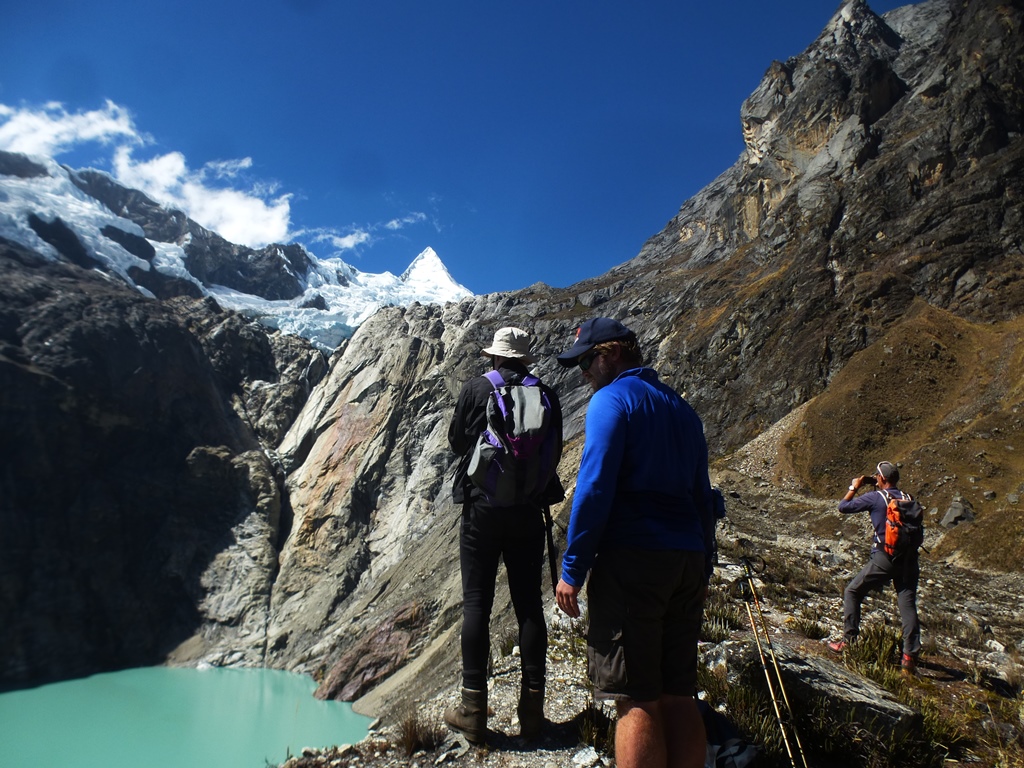
Unmissable Highlights of the Alpamayo Trekking Route
What sets the Alpamayo Trek Peru apart from any other multi-day trek in the world is the sheer variety of microclimates, massive vertical walls, and ancient pre-Inca history packed into a single loop. Here are the iconic landmarks you will encounter:
1. The Iconic Jancarurish Camp (The Perfect View)
While you catch glimpses of Alpamayo from various angles on other routes, nothing compares to standing at the Jancarurish Campsite. Located directly beneath the northern face of the mountain, this is the exact spot where the famous “perfect pyramid” photos are taken. Watching the late afternoon sun turn the fluted ice walls of Alpamayo from brilliant white to deep golden-orange is worth every single step of the journey.
2. Laguna Cullicocha: A Glacial Masterpiece
Sitting directly at the foot of the massive Santa Cruz massif, Laguna Cullicocha (4,620m) is arguably one of the most beautiful high-altitude lakes in the entire Cordillera Blanca. Its deep, sapphire-blue waters contrast sharply with the blinding white glaciers and dark volcanic rock surrounding it. The trail hugs the edge of this massive crater lake, offering jaw-dropping vantage points as you climb toward the higher passes.
3. Deep Cultural Immersion in Remote Andean Villages
Unlike treks that are completely isolated from human life, parts of the Alpamayo circuit cross through remote, indigenous farming communities like Colcabamba and Vaquería. Here, locals still speak Quechua, wear traditional, colorful hand-woven clothing, and practice ancient agricultural techniques that have remained unchanged for centuries. It offers a rare, authentic look into the resilient heart of modern Andean life.
Mastering the High Altitude Mountain Passes
The true physical challenge of the Alpamayo Trek Peru lies in its profile. The route requires you to cross multiple high-altitude passes, often on consecutive days. Understanding what lies ahead will help you prepare mentally and physically for the trail:
Cara Cara Pass (4,830m): This is one of the most famous and visually rewarding passes on the circuit. The climb is steep and can be windy, but once you reach the crest, you are rewarded with an unrestricted, sweeping panoramic view of the Alpamayo and Jancarurish valleys.
Osoruri Pass (4,860m): The highest standard point on the classic itinerary. The terrain here feels distinctly alpine and lunar—barren, rocky, and thin-aired. Crossing this pass successfully requires slow, rhythmic pacing and excellent trekking poles.
Gara Gara Pass (4,830m): Offering a wild descent into the untamed Tayapampa valley, this section showcases the vast, uncrowded scale of the northern Cordillera Blanca, where you are far more likely to encounter a herd of wild llamas than another group of tourists.
Alpamayo Trek Options
 4 DAYS - 3 NIGHTS
Vaqueria to Santa Cruz, hike trails, explore hidden hamlets discover stories from each mountain, and you will have many beautiful stories and experiences to tell in your life
 9 DAYS - 8 NIGHTS
In the 9-day hiking through the Cordillera Blanca you will enjoy the camps for having a beautiful view of the mountains, snowy peaks, lagoons and stars.
 8 DAYS - 7 NIGHTS
The mountains and trails of Alpamayo will have impressive challenges for your adventures, dare to be part of a group to have a beautiful and unforgettable experience.
Physical Preparation and Training Guidelines
ecause of the sustained high altitude and the technical, loose nature of some of the steep descents, the Alpamayo Trek Peru should not be taken lightly. It requires a solid foundation of physical fitness and lower-body strength.
Cardiovascular Endurance
To prepare your lungs and heart for the thin air of the Andes, you should focus on high-exertion cardio activities at least 3 months prior to your trip. Long-distance trail running, lap swimming, and mountain biking are excellent ways to build the lung capacity required to hike efficiently above 4,500 meters.
Strength and Stamina
The steep ascents and knee-jarring descents of the Cordillera Blanca require strong legs and a stable core. Incorporate the following movements into your gym or home workouts:
Weighted Squats & Lunges: To build power in your quadriceps and glutes for the long uphill climbs.
Step-ups (with a loaded backpack): To mimic the exact motion of climbing rocky alpine trails.
Planks & Core Twists: A strong core prevents fatigue when balancing on uneven terrain with a daypack.
Essential Packing List for the Alpamayo Circuit
When packing for the Alpamayo Trek Peru, the golden rule is layering. The weather in the Cordillera Blanca is notorious for extreme temperature shifts. You will likely hike in a t-shirt under a scorching tropical sun during the morning, and sleep inside a tent wrapped in heavy down layers as temperatures plummet below freezing at night.
The Outer Layer: A high-end, fully waterproof and windproof Gore-Tex shell jacket and matching rain pants. Mountain storms can roll in quickly.
The Insulation Layer: A high-quality down jacket (minimum 700-fill power) is absolutely essential for keeping warm at the high campsites once the sun goes down.
Footwear: Sturdy, waterproof, broken-in trekking boots with deep vibram lugs for traction on loose scree. Bring high-quality merino wool hiking socks to prevent blisters.
Sleeping Gear: A rated 4-season sleeping bag (comfort level down to -10°C / 14°F) and an insulated sleeping mat to block the freezing ground temperature.
Hydration & Sun Protection: A minimum 3-liter water capacity (hydration bladder or bottles), water purification tablets, high-SPF sunscreen, a wide-brimmed sun hat, and 100% UV-protection polarized sunglasses to protect against blinding glacier glare.
Choosing a Responsible Local Agency for Your Expedition
While independent trekking is legally permitted in certain parts of the park, tackling a complex, high-altitude circuit like the Alpamayo Trek without professional support is highly discouraged. Navigating remote passes, managing emergency wilderness medical situations (like acute mountain sickness), and coordinating camp logistics require specialized local expertise.
By booking your expedition with an experienced, licensed local agency like Peru Huayhuash, you guarantee your safety while directly supporting the local economy. We employ certified, bilingual UIAGM mountain guides, professional backcountry chefs who prepare nutrient-dense meals, and local muleteers (arrieros) from the surrounding villages. We ensure that all our mountain staff are paid fair, ethical wages, directly contributing to the sustainable development of the remote communities you will visit along the trail.
Alpamayo – Frequently Asked Questions
The Alpamayo Trek is considered moderate to challenging due to high altitude and long hiking distances.
The trek usually takes between 7 to 10 days depending on the chosen itinerary.
The best time is during the dry season from May to September, when weather conditions are more stable.
Yes, hiring a guide is highly recommended due to the remoteness and complexity of the route.
The trek includes several high passes, often exceeding 4,500 meters above sea level.
Yes, altitude sickness is a concern. It is important to acclimatize properly before starting the trek.
Bring warm clothing, waterproof gear, trekking boots, a sleeping bag, sunscreen, snacks, and a first aid kit.
Definitely. It offers one of the most scenic and remote trekking experiences in the Andes.
Copyright © 2019 Peru Huayhuash. All Rights Reserved.