Huayhuash Trek Peru

Discover one of the most breathtaking high-altitude treks in the Peruvian Andes, surrounded by towering peaks and pristine landscapes.

Why Choose the Huayhuash Trek in Peru?

The Huayhuash Trek is widely considered one of the most spectacular trekking routes in the world, located in the remote Cordillera Huayhuash in Peru. This challenging multi-day trek takes you through dramatic mountain scenery, featuring snow-capped peaks, crystal-clear lakes, and untouched natural beauty.

Unlike more popular routes, the Huayhuash Trek offers a true off-the-beaten-path experience, perfect for adventurous hikers seeking solitude and authenticity. The circuit typically lasts between 8 to 12 days and reaches extreme altitudes, including passes above 4,800 meters. Along the way, trekkers are rewarded with incredible views of iconic mountains like Yerupajá, the second-highest peak in the country.

Whether you’re an experienced trekker or looking for a once-in-a-lifetime challenge, the Huayhuash Trek delivers an unforgettable journey through one of the most stunning alpine regions in South America.

Starting near the town of Huaraz, the Santa Cruz Trek typically takes 3 to 4 days to complete and is considered one of the best short treks in South America. The route passes through the stunning Huascarán National Park, a UNESCO World Heritage Site known for its rich biodiversity and dramatic mountain scenery.

Hikers on the Santa Cruz Trek will cross the impressive Punta Unión Pass at over 4,700 meters above sea level, offering panoramic views of iconic peaks such as Alpamayo and Artesonraju. Along the way, trekkers can experience traditional Andean culture, encounter local communities, and enjoy pristine natural surroundings far from crowded tourist routes.

Key Highlights of the Cordillera Huayhuash Circuit

What makes the Huayhuash Trek so uniquely famous among international mountaineers? It is the sheer concentration of massive, vertical peaks and turquoise lakes packed into a relatively compact mountain range. Here are the highlights you will experience on the trail:

1. Yerupajá: The Mighty Fortress

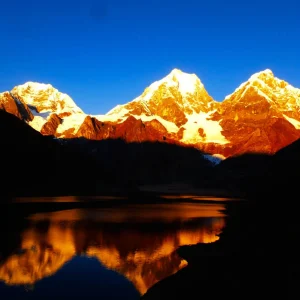
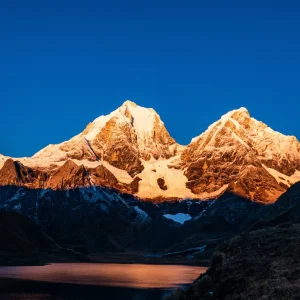
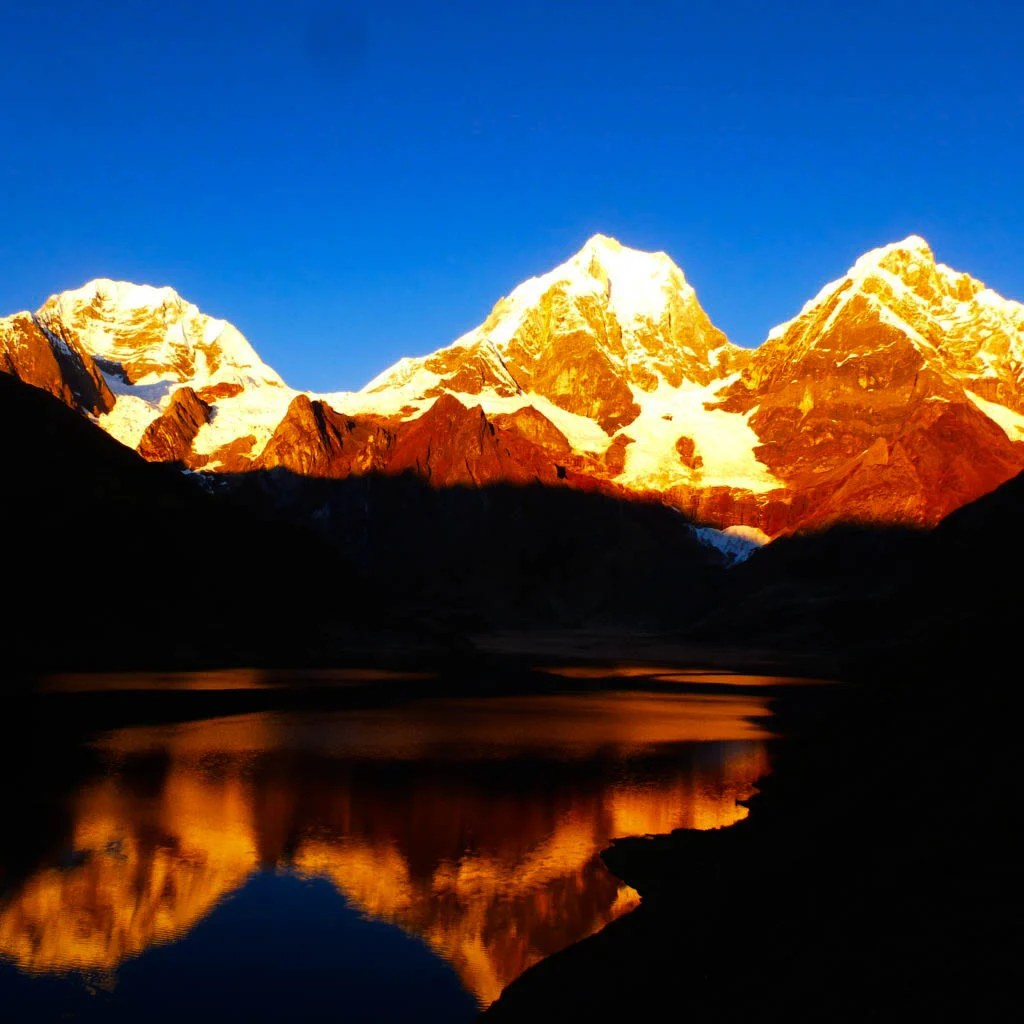
Standing at a massive 6,634 meters, Mount Yerupajá is the second-highest mountain in Peru and the highest peak in the Amazon River watershed. Its sheer, near-vertical west face dominates the skyline during the first half of the trek. Watching the sunrise hit the frozen walls of Yerupajá from your campsite is an experience that words cannot fully describe.

2. Siula Grande and the “Touching the Void” Legend

For fans of mountaineering history and literature, the Cordillera Huayhuash is holy ground. Siula Grande (6,344m) was the site of Joe Simpson and Simon Yates’ legendary 1985 survival story, chronicled in the famous book and documentary Touching the Void. Seeing the terrifying, crevasse-ridden glacier fields of this mountain in person adds a profound layer of awe to the trek.

3. The Three Lagoons Viewpoint (Tres Lagunas)

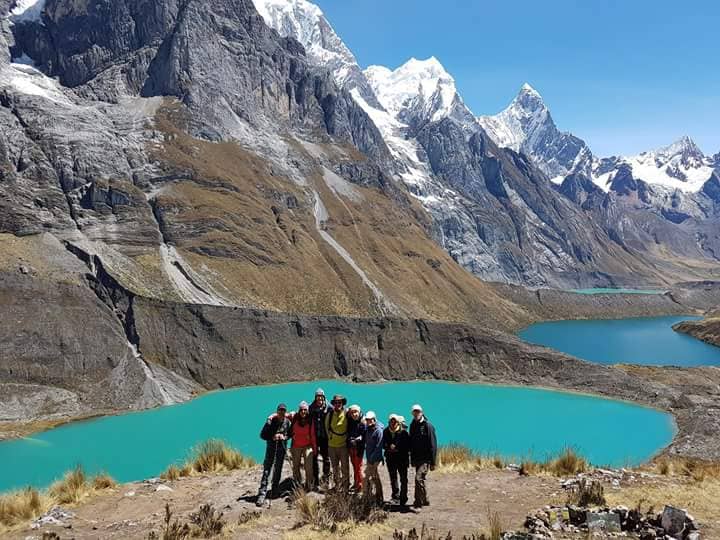
Perhaps the most photographed location on the entire Huayhuash Trek is the viewpoint overlooking Laguna Carhuacocha. From this high ridge, you can look down at three distinct, brilliantly colored glacial lakes—Gangrajanca, Siula, and Quesillococha—perfectly reflecting the massive glaciers directly above them.

Huayhuash Trek Options

Comprehensive Overview of the Mountain Passes

The true challenge of the Huayhuash Trek lies in its repetitive elevation changes. You do not simply hike along a flat valley; almost every single day involves climbing out of a valley, crossing a high-altitude mountain pass, and dropping down into a new campsite.

  • Cacananpunta Pass (4,700m): Usually the first major pass of the circuit. It introduces hikers to the sharp contrast between the dry western slopes and the more humid eastern side of the Andes.

  • Siula Pass (4,800m): Offering one of the most demanding climbs, the reward at the top is a sweeping, unrestricted view of the entire eastern wall of the Huayhuash range.

  • Cuyoc Pass (5,000m): The highest standard point on most itineraries. Reaching the top of Cuyoc feels like stepping onto another planet, surrounded by dark volcanic rock, massive glaciers, and thin, crisp air.

  • San Antonio Pass (5,020m): An optional but highly recommended side-trip. The descent is steep and loose, but the view looking straight down onto Laguna Sarapococha is mind-blowing.

Preparing for the Challenge: Physical Fitness and Gear

Because of the sustained high altitude and the long daily hiking distances, the Huayhuash Trek requires an excellent level of physical fitness and cardiovascular endurance.

How to Train for the Trek

We highly recommend starting a training regimen at least 3 to 4 months before your arrival in Peru. Focus heavily on:

  1. Cardiovascular Training: Long-distance running, cycling, or swimming to build lung capacity.

  2. Leg Strength: Weighted squats, lunges, and step-ups to prepare your quadriceps and calves for steep ascents and descents.

  3. Real-World Hiking: The best training for hiking is hiking. Spend your weekends walking on inclined trails with a weighted backpack to get your body used to the mechanics of the trail.

Essential Packing List for the Cordillera Huayhuash

When packing your gear, keep in mind that alpine weather is highly unpredictable. You will experience warm, intense tropical sun during the day, followed immediately by sub-zero temperatures at night.

  • Footwear: Broken-in, waterproof trekking boots with excellent ankle support, alongside multiple pairs of thick merino wool hiking socks.

  • Layering System: Moisture-wicking base layers, a warm fleece or mid-layer, a high-quality down jacket (essential for evenings at camp), and a fully waterproof, windproof outer shell jacket.

  • Sleeping Gear: A rated 4-season sleeping bag (comfort rating of at least -10°C) and an insulated sleeping pad to keep the ground cold from seeping into your body.

  • Protection: High-SPF sunscreen, polarized sunglasses (to protect against glacier glare), a wide-brimmed sun hat, and a warm beanie.

The Perfect Acclimatization Strategy: The Santa Cruz Trek

Tackling the Huayhuash Trek without proper altitude adjustment is highly risky. Because the trail spends almost its entire duration above 4,000 meters, a smart preparation strategy is mandatory. This is where the world-famous Santa Cruz Trek comes into play as the ultimate warm-up expedition.

Starting near the trekking hub town of Huaraz, the Santa Cruz Trek typically takes 3 to 4 days to complete and is widely recognized as one of the best short treks in South America. The route passes through the stunning Huascarán National Park, a UNESCO World Heritage Site globally celebrated for its rich biodiversity, deep valleys, and vertical granite walls.

Why Combine Santa Cruz with Huayhuash?

Hikers on the Santa Cruz Trek cross the impressive Punta Unión Pass at over 4,750 meters above sea level. Reaching this altitude over a shorter, 3-to-4-day itinerary acts as the perfect training ground for your body, triggering red blood cell production before you face the longer, more demanding passes of the Huayhuash range.

Beyond its logistical benefits for acclimatization, the Santa Cruz route offers breathtaking panoramic views of iconic peaks such as Alpamayo (once voted the most beautiful mountain in the world) and Artesonraju (the famous mountain that inspired the Paramount Pictures logo). Along the way, trekkers experience traditional Andean culture, encounter remote local farming communities, and enjoy pristine natural surroundings far from crowded commercial tourist routes.

Huayhuash Trek – Frequently Asked Questions

The Huayhuash Trek is considered challenging due to its high altitude, long distances, and multiple mountain passes above 4,500 meters.

The full circuit typically takes between 8 to 12 days, depending on the route and itinerary.

The best time to hike is during the dry season, from May to September, when weather conditions are more stable.

While it is possible to trek independently, hiring a guide is highly recommended due to the remoteness and difficulty of the route.

The trek includes several high passes, with some reaching over 5,000 meters above sea level.

Yes, altitude sickness is a serious concern. Proper acclimatization in Huaraz for at least 2–3 days is strongly recommended.

You should pack warm layers, waterproof clothing, trekking boots, a sleeping bag, sunscreen, snacks, and a first aid kit.

Absolutely. It is considered one of the most beautiful and remote trekking experiences in the world.

What are you waiting for?